In Progress
Content and visuals are actively being refined as the project evolves. Some sections may change as additional exploration and validation are completed.
A shared design system supporting multiple client-facing and internal products across a large HR platform
Role
Senior Product Designer
Timeline
Multi-year, ongoing contributions
Platform
Cross-platform Design System
Summary
While embedded on product teams, I regularly contributed components and patterns to a shared design system when product work surfaced system-level needs. My contributions focused on designing reusable, accessible components that balanced flexibility with governance and could scale across diverse products and use cases.
Problem
Product teams frequently encountered system-level gaps
As products evolved, teams often ran into interaction needs that were either missing from the design system or not flexible enough to support real-world use cases. Without thoughtful system contributions, these gaps risked being addressed through one-off solutions that would fragment the experience over time.
Reusable components needed to support diverse contexts
Components designed for a single product or workflow often struggled when applied more broadly. Differences in audience, complexity, and risk meant that reusable components had to be carefully designed to work across contexts without introducing usability, accessibility, or consistency issues.
Goals
Contribute components that scale responsibly across products
The goal was to design system components that addressed real product needs while fitting within an established, governed design system. Contributions needed to be reusable, accessible, and adaptable without encouraging fragmentation or misuse.
01
Support reuse without sacrificing clarity
Design components that could be applied across multiple products while remaining understandable and usable in different contexts.
02
Embed accessibility into foundational patterns
Ensure accessibility considerations were addressed early through collaboration with accessibility partners and thoughtful state design.
03
Respect existing systems constraints
Evolve or extend existing components where possible, avoiding unnecessary replacements that could introduce design and engineering debt.
04
Align contributions with system governance
Work within established design system processes to ensure components were feasible, documented, and aligned with broader platform goals.
Approach
Designing within a governed system
I approached design system contributions with the understanding that the system served many teams and products. Each component began with a clear product need, followed by competitive analysis and exploration to ensure the solution could scale. I partnered closely with accessibility and engineering to balance usability, feasibility, and long-term maintainability.
My role as a design system contributor
I was not a dedicated designer on the design system team, but I regularly contributed components when product work revealed system-level needs. I led design for specific components end-to-end, including research, design exploration, accessibility review, documentation, and developer handoff. I also participated in sprint demos to gather feedback and align with product leadership.
Design for complexity without overwhelming users
Components should support complex information while remaining legible and approachable. This was especially important for dense or data-heavy interactions, where clarity and structure were critical.
Evolve foundational components thoughtfully
Enhancements to existing components needed to respect current usage and established mental models. Rather than replacing patterns outright, I focused on extending them to support additional use cases.
Introduce new patterns with restraint and clarity
Emerging patterns, such as AI-assisted components, required careful consideration to ensure they supported users without creating confusion or false expectations.
Outcomes
Shipped components supporting multiple products
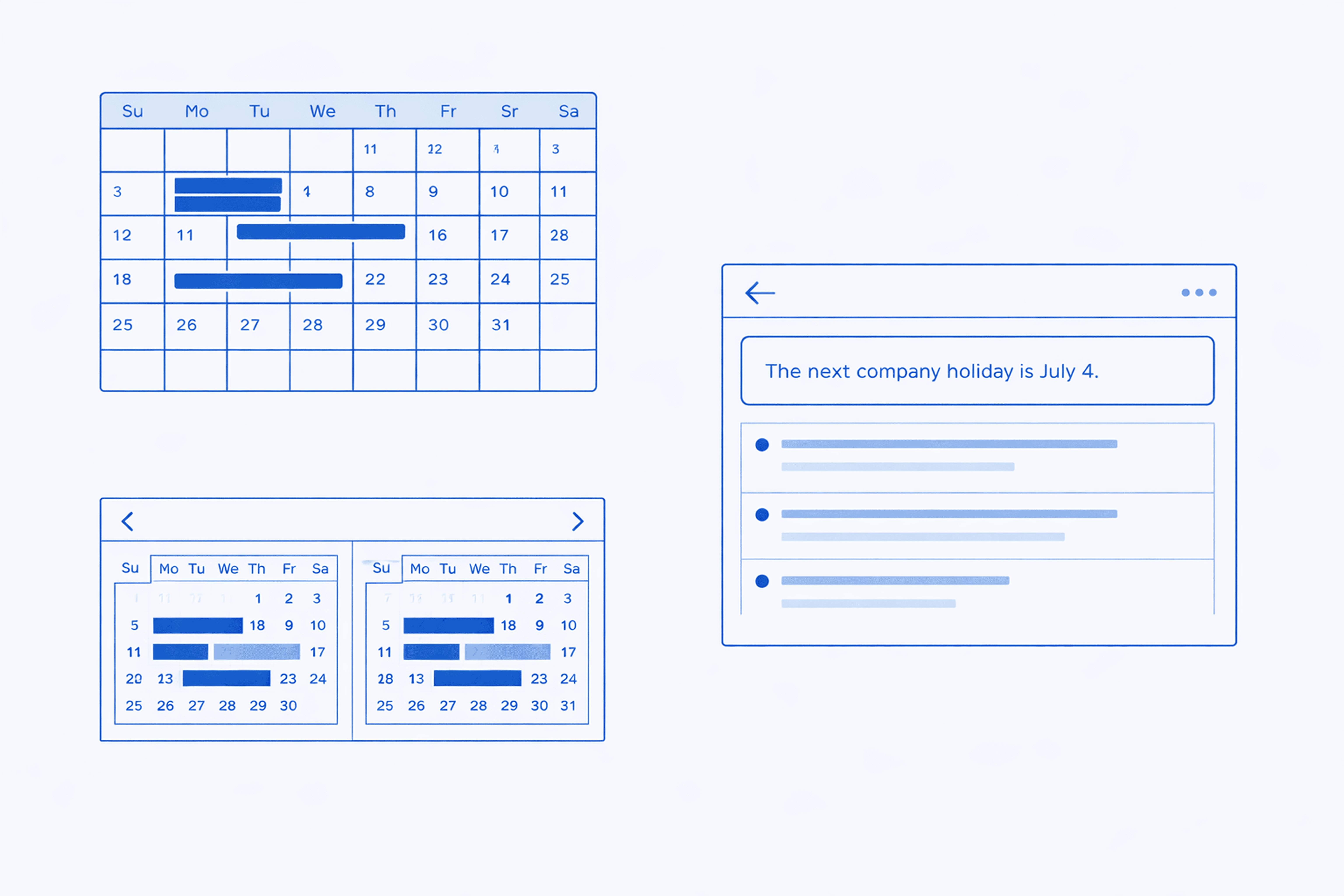
The AI Summary and Date Picker / Date Range Picker components shipped and are actively used by engineering teams across products. The Event Calendar progressed through design and early development, with documentation and handoff completed prior to my departure.
Reduced reliance on one-off solutions
These contributions helped align product needs with shared system patterns, reducing fragmentation and reinforcing consistent interaction behaviors across the platform.
Key Takeaways
01
Design systems are shaped by real product needs.
The most valuable system contributions often emerge from concrete product challenges rather than abstract planning.
02
Governance enables scale, not limitation
03
System patterns require contextual judgement
Even well-designed components must be evaluated against user intent, complexity, and risk to ensure they are applied appropriately.
04
Accessibility must be foundational
Partnering early with accessibility experts helped ensure components were inclusive by design rather than retrofitted later.